
Weekly Market Updates | 03/27/2026
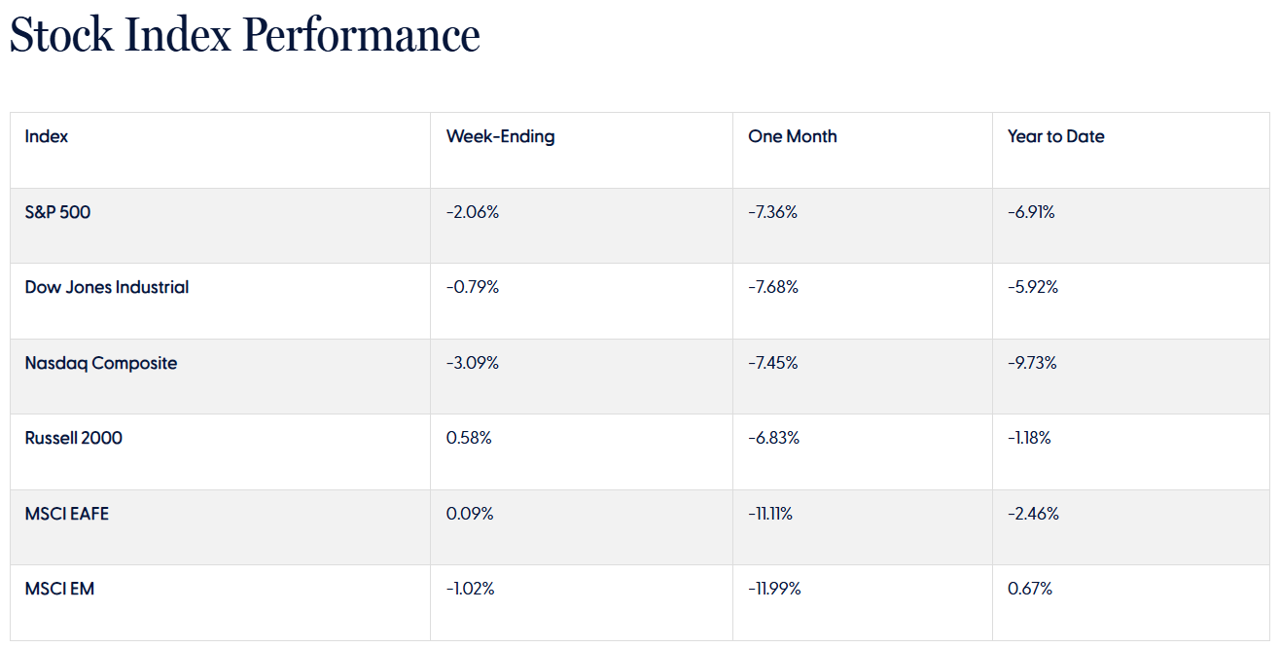
Market Summary and Performance, ending Friday March 27th, 2026
U.S. and global equity markets finished the week mostly lower as geopolitical uncertainty in the Middle East continued to drive volatility across regions and asset classes. Equities were whipsawed by shifting hopes for de‑escalation, choppy energy prices, and renewed pressure on large‑cap technology stocks, while Treasury yields moved higher amid weak auction demand and elevated inflation expectations. International markets were mixed, with Europe showing relative resilience and most Asian markets declining, as investors remained highly sensitive to developments affecting global energy supplies. In commodities, crude oil was little changed, and in currencies, the dollar strengthened and the yen weakened near key levels.
Correction Territory: Both the Dow and Nasdaq entered “correction” territory on Friday, March 27th, after declining -10% from their recent highs in February and October respectively
Labor Market Weakness Adds Pressure: Compounding geopolitical woes, February's U.S. non-farm payrolls contracted by 92,000 jobs, far worse than the expected 60,000 gain, with the unemployment rate rising to 4.4% from 4.3%.
Key Events This Week
Wednesday: ADP Employment Report; U.S. Retail Sales; ISM Manufacturing Report
All Eyes On Iran: Continue to monitor progress on opening of Hormuz Strait and ending conflict in Iran
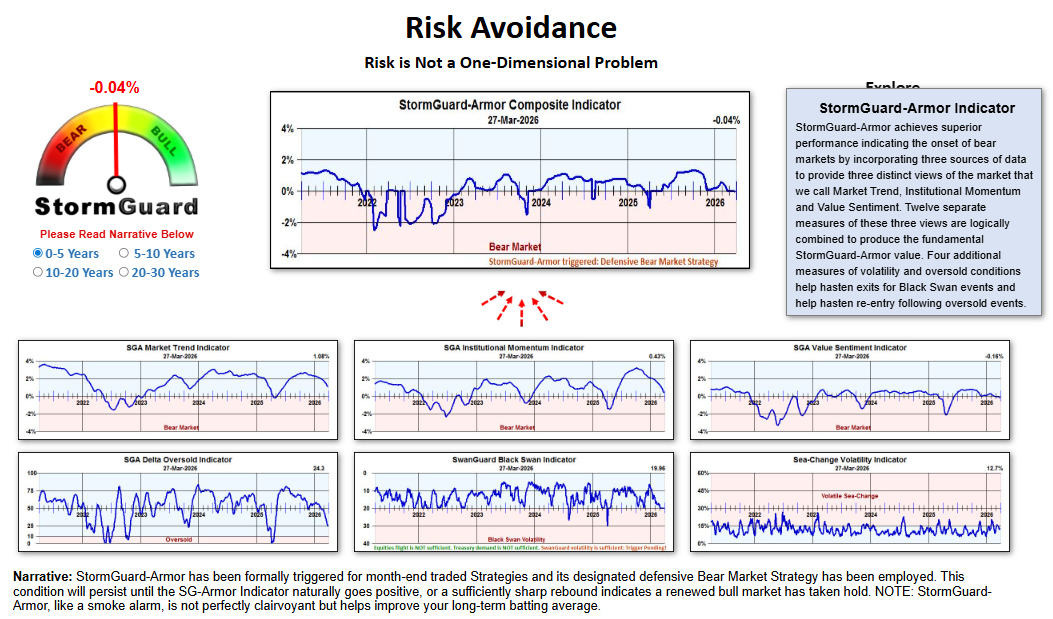
StormGuard-Armor retreated into negative territory on 03/25/26 after amidst the wavering uncertainty caused primarily by the ongoing Iran conflict.
We do not attempt to time the markets or make short-term trading decisions based on random volatility or a “few bad days.”
The StormGuard Composite Indicator is derived from its three primary indicators (also above) plus more than a dozen relatively minor confirmation indicators used to validate the conclusions. The Market Trend Indicator still indicates overall bullish large-cap behavior, as does the Institutional Momentum Indicator. However, the Value Sentiment Indicator (new highs/lows weighted) has been weak and is heavily influencing the overall negative reading, which now appears to be declining.
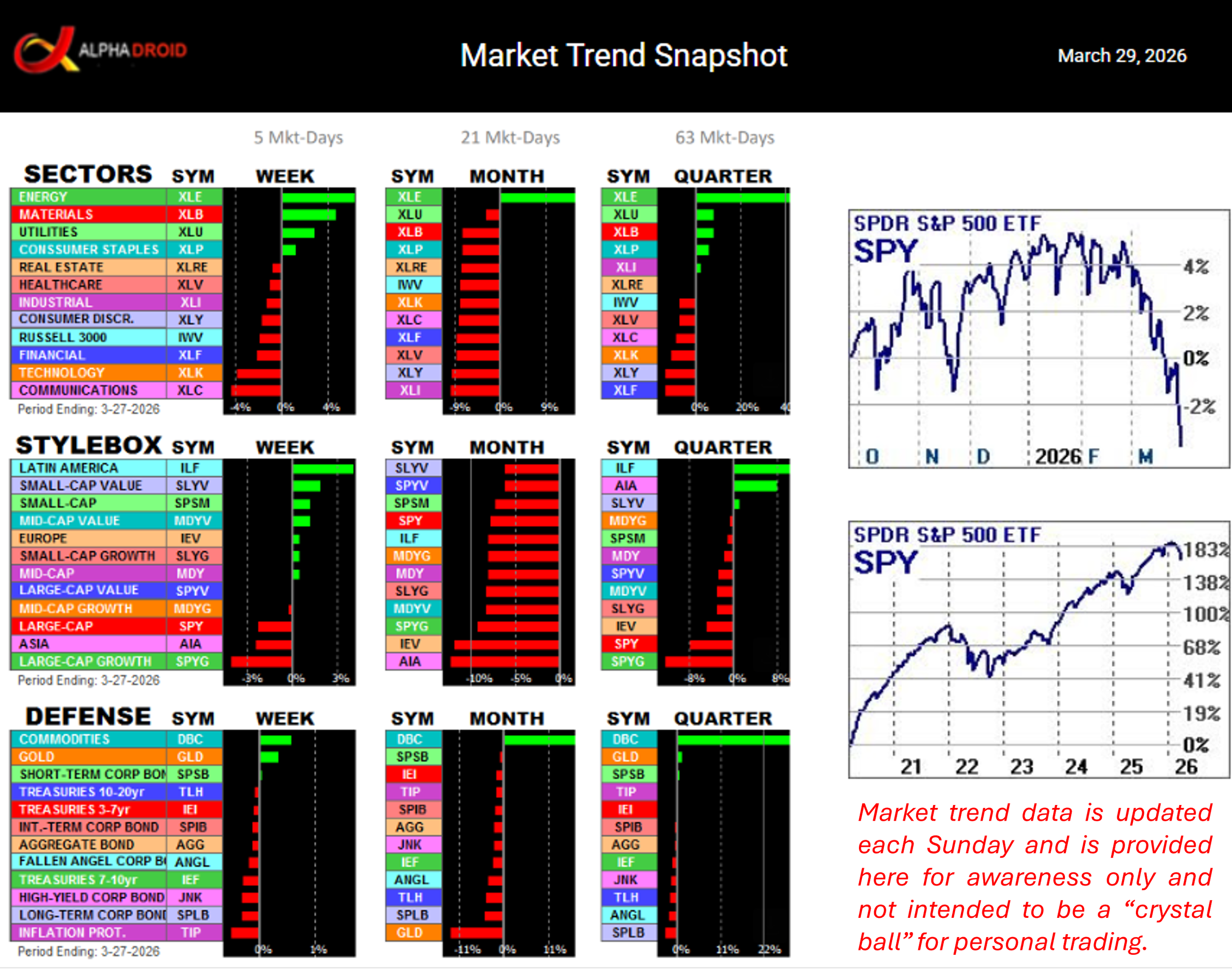
Very few defensive safe-havens during this recent bout of volatility and Global uncertainty but the flight to safety (bonds) is starting to materialize.
Traditionally, assets like bonds and US Treasuries provide an inverse relationship to the direction of stocks — meaning that transitioning to these assets during market downturns is a great defensive strategy, but as you see in this Market Trend Snapshot, there have been few bright spots in Sectors, Style or Defense for the past several months.
For example, while the S&P 500 (along with other indexes around the world) tumbled in 2008, these “Bear Market Strategies” would have returned our clients a very lucrative positive gain, considering we would have followed these same StormGuard indicators and trade signals.
We find ourselves in a unique situation where sitting on the sidelines in conservative bond strategies is not providing the protection we seek. This is primarily because the interest rate environment is so uncertain — while most believed we would continue to see the Federal Reserve CUT interest rates in 2026, lingering inflation concerns may pause those cuts and even necessitate short-term rate INCREASES.
So What: Our “Bear Market” posture will be cautiously optimistic reverting all “growth” portfolios into the Canopy DD Low Volatility Fund (or Tax-Aware version). Traditional safe-havens that declined during the first quarter of 2026 are starting to show signs of life. We will enhance our cash positions to 30% and remain invested in “low volatility” growth strategies capitalizing on the adaptive nature of the EZ-RO Index and EZRO ETF. This will allow for upside participation that still naturally occurs even during bear markets and recessions. Once there are clear signals of resolution and a return to a positive and rising StormGuard, we will deploy cash reserves and “buy the dip,” capitalizing on the lower prices.